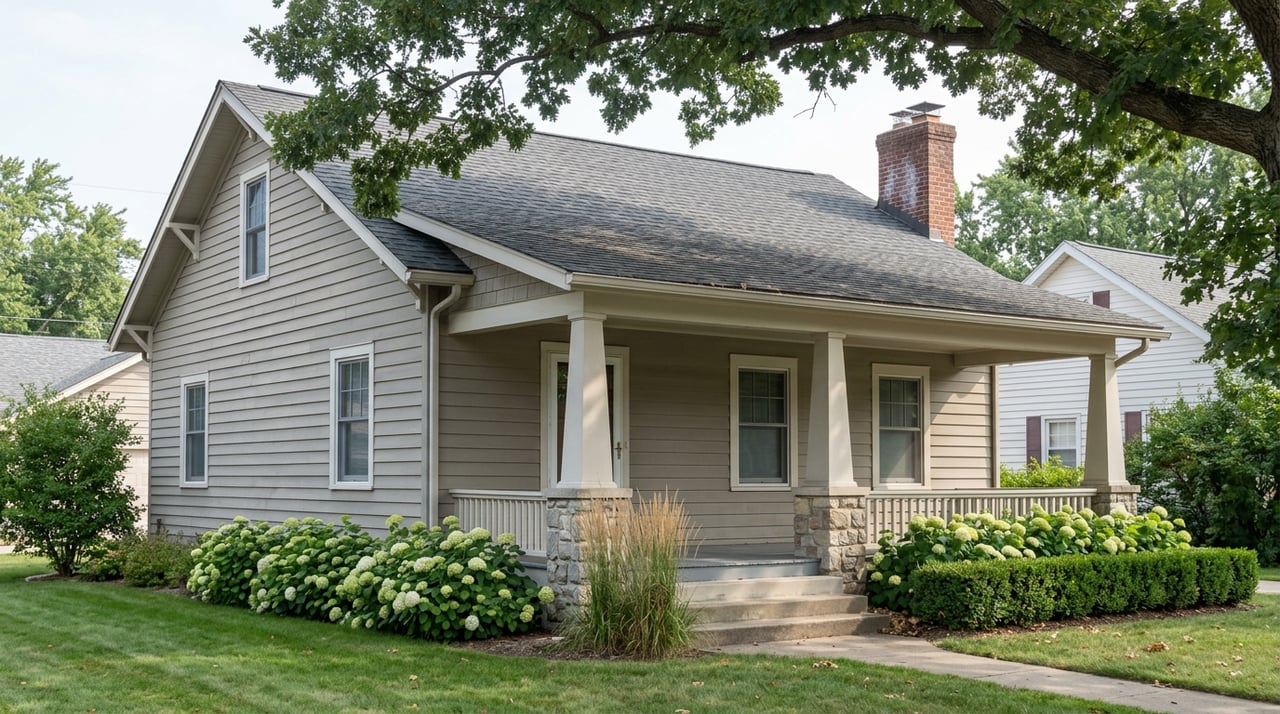
St. Paul's Seller Inspection Is "Disclosure Only." In Nine Neighborhoods, That Promise Only Covers Half the Story.
September 24, 2026
September 24, 2026
If a home inspector flags a rotting porch railing on a listing in the Historic Hill Heritage Preservation District, how fast can that railing actually get fixed?
Most St. Paul sellers assume the answer is: as fast as a contractor can show up. That assumption comes from a fact that is technically true and often repeated by agents and inspectors across the metro. St. Paul's Truth-in-Sale of Housing report, known as TISH, is a disclosure-only document. Unlike Minneapolis, the city does not force sellers to complete most repairs the evaluator finds before closing. That reputation is well earned, and it makes St. Paul feel like the lower-friction city to sell in.
It is, for the vast majority of homes. But for a meaningful slice of St. Paul's housing stock, that same disclosure-only status hides a second approval process that has nothing to do with TISH and everything to do with how long a seller actually has before closing.
Every single-family home, duplex, condo with its own parcel ID, and townhouse listed for sale in St. Paul needs a TISH evaluation, completed and displayed at the property within three calendar days of listing under Chapter 189 of the city's legislative code. A licensed evaluator walks the house and notes the condition of structural, electrical, and mechanical systems on a standardized form.
Here is the part that actually separates St. Paul from its neighbor across the river: the city will not make you fix almost anything the evaluator finds. There is one exception. If the home lacks a working hardwired smoke alarm, the city's electrical inspector sends a letter requiring a licensed contractor to install one and pull a permit. Everything else on the report is information for the buyer, not a punch list for the seller.
Minneapolis runs its own TISH program differently, with a process that can require sellers to complete identified repairs before a sale closes. That contrast is real, and it is the reason "St. Paul is easier" has become common wisdom among sellers comparing the two cities.
| St. Paul TISH | Minneapolis TISH | |
|---|---|---|
| Repairs required by the city | Only a working hardwired smoke alarm | Can require completion of identified repairs before sale |
| Report purpose | Disclosure only | Disclosure plus enforceable repair items |
| Who the report protects | The buyer's right to know | The buyer's right to know and a repair standard |
That table is accurate. It is also incomplete for anyone selling inside one of St. Paul's nine locally designated Heritage Preservation Districts.
St. Paul's Heritage Preservation Commission, established in 1976 after the city lost the Ryan Hotel and nearly lost the Landmark Center to demolition, currently oversees nine locally designated historic districts. Some of the most recognizable include the Historic Hill Heritage Preservation District, home to the Summit Avenue mansion row, the Dayton's Bluff Heritage Preservation District, and the Como Shops district tied to the old Northern Pacific Railway shops.
Local designation is the tier that matters here. A property can also carry state or national historic recognition, which is largely honorific and doesn't come with a city permitting requirement. Local designation is different. Once a block or building carries that status, any exterior change to it has to go through Heritage Preservation Commission review before the city will issue a permit.
That review requirement exists completely independent of TISH. TISH tells a buyer what condition the porch, windows, or siding are in. It says nothing about what it takes to actually change any of it.
Here is where the disclosure-only reputation starts to work against a seller instead of for them.
Say a buyer's private inspector, working separately from the TISH evaluator, flags porch rot or a failing window during their due diligence period. Because St. Paul's TISH doesn't force the seller to fix that kind of item, the seller has more flexibility than a Minneapolis seller would in the same spot. They can negotiate a credit, split the cost, or simply agree to make the repair themselves.
If the seller chooses to make the repair, and the home sits inside one of the nine districts, and the item is a street-facing or character-defining feature like a porch, window, or masonry wall, that repair now needs Heritage Preservation Commission review and approval before a contractor can pull a permit.
The Commission meets once a month, on Monday afternoons at 3:30 in City Council Chambers. Public hearing notices for applications run in the Pioneer Press at least ten days before the meeting. That is not a same-week fix. Depending on when in the monthly cycle a repair request lands, a seller can be looking at several weeks between "buyer wants this fixed" and "contractor has an approved permit," on a property where the TISH report itself never required the fix in the first place.
The disclosure-only status is still true. It just describes the city's power over the seller, not the buyer's leverage or the calendar a seller runs into the moment they try to satisfy that leverage.
Picture the timeline in order. The TISH evaluator visits within three days of listing and produces a report with no forced repairs, aside from a smoke alarm if one is missing. The home goes on the market looking straightforward. A buyer's private inspector, a different evaluation entirely, later flags a rotted porch post. The purchase agreement gives the seller the option to repair rather than credit. The seller, wanting to move things along, calls a contractor. The contractor asks whether the address is in a heritage district. It is. Now there is a Heritage Preservation Commission application, a monthly meeting to wait for, and a newspaper notice period, all sitting between the seller's decision to fix the item and the day a permit actually exists.
None of that shows up on the TISH form. All of it is real, and it is specific to roughly nine pockets of the city rather than St. Paul as a whole.
Does a National Register listing by itself trigger Commission review? No. National and state historic recognition are separate tiers from local designation. The Commission's approval authority comes from the city's local ordinance, not from a property's presence on the National Register alone.
Does the TISH exemption for family sales also exempt heritage district review? No, and this trips people up. TISH and Heritage Preservation review are two different systems. A sale between immediate family members skips the TISH requirement, but if that same family later wants to alter a porch or window on a heritage-designated property, the Commission review still applies. One system governs disclosure at the point of sale. The other governs alteration, and it runs on its own timeline regardless of who owns the house.
What about condos inside these districts? A condo with its own parcel ID still needs a TISH evaluation like any other unit sale. Exterior alterations on a condo building typically run through the homeowners association rather than an individual owner, since exterior walls, windows, and rooflines are usually common elements the association controls.
Selling an older St. Paul home doesn't have to be stressful, and most of the time it isn't. The point of walking through this isn't to make a heritage district sound like a liability. It's a genuinely good problem to have a home worth protecting. It just means the planning conversation needs to start earlier than "disclosure only" makes it sound, especially if your address falls inside one of the nine.
If you're weighing a sale along Summit Avenue, in Dayton's Bluff, near the old Como Shops, or anywhere else in St. Paul and want a straight read on your timeline before you list, reach out to Minnesota Home Girls. No pressure, no assumptions about where you're starting from, just a real conversation about what your specific address and your specific timeline actually require.
Stay up to date on the latest real estate trends.



We'd love to hear from you! Whether you're buying, selling, or just exploring your options, we're here to provide answers, insights, and the support you need. Contact us and start planning your next move.