St. Paul's Median Home Price Isn't What Highland Park Buyers Are Actually Paying
August 13, 2026
August 13, 2026
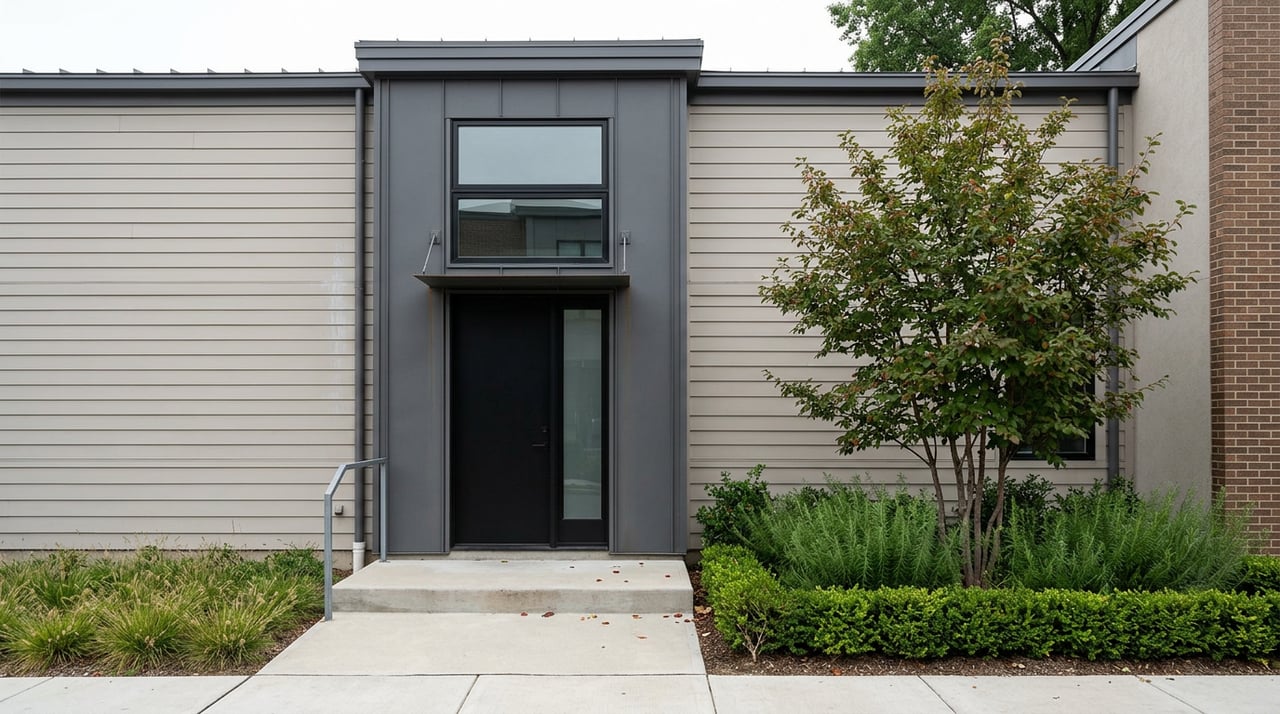
Stand at the corner of Ford Parkway and Mississippi River Boulevard and you're looking at one of the strangest price gaps in the Twin Cities. Walk two blocks in one direction and you're in a neighborhood of 1940s bungalows selling close to the city's long-running median. Walk two blocks the other way and you're on land where a builder won't sell you a rowhome for less than $679,990, and a bare lot along the river can run past a million dollars. Same zip code. Same school district. Two different markets wearing one median price.
That gap isn't a fluke of a hot pocket outbidding itself. It's the visible result of a fight St. Paul's city council had with itself over rent control, one that determined where new construction could happen in this city and where it couldn't.
Over the three months ending May 2026, the median sale price for a home in St. Paul was $304,000, down 1.9% from the same period a year earlier. That number is useful if you're comparing an existing three-bedroom rambler in Highland Park to one in Como or Macalester-Groveland. It tells you almost nothing about what it costs to buy something newly built inside the city, because for most of the past four years, almost nothing has been newly built inside the city.
Downtown St. Paul's most recent reported median, from January 2026, sat around $220,000, a figure dragged down by an aging condo stock that's been sitting on the market for months at a time. So the citywide median is really an average of two very different stories: a legacy housing stock trading at legacy prices, and a small, concentrated pocket of brand-new inventory priced like it belongs somewhere else entirely.
In November 2021, St. Paul voters approved one of the strictest rent stabilization ordinances in the country, capping annual rent increases at 3% with few built-in exceptions. Developers said it made building in St. Paul a bad bet, and the permit numbers backed them up. According to a MinnPost analysis cited by the Minnesota Reformer, housing production in the city dropped 80% in 2024 compared to the previous three-year average.
The city had already tried to soften the blow once, carving out a 20-year exemption for newly built rental housing back in September 2022. It didn't move the needle enough. By early 2025, permits were still stalled and council members were hearing from their own economic development staff that the ordinance was the thing scaring capital away.
On May 7, 2025, the city council voted 4-3 to go further, permanently exempting any rental property that received its first certificate of occupancy after December 31, 2004 from the rent cap entirely. The change took effect June 13, 2025.
Council President Rebecca Noecker framed it as a message as much as a policy change:
"We knew we needed to take a step to really send a strong, clear signal to the market."
The signal worked, but it didn't work evenly. It reached the projects that were already large enough, and already patient enough, to wait out three years of political uncertainty. It didn't spark a wave of small infill builds across St. Paul's existing neighborhoods. The clearest evidence of that is what happened next at the old Ford plant site.
Highland Bridge sits on 122 acres along the Mississippi River where a Ford assembly plant operated until it closed in 2011. Ryan Companies has been the master developer since Ford selected the firm in June 2018, and construction had been creeping along in fits and starts for years. In June 2025, Ryan Companies broke ground on the Gateway Project, a set of market-rate apartments the company will own and operate itself.
But according to Twin Cities Business, development manager Sean Ryan was direct about what actually got shovels in the ground: the ordinance rollback mattered, but it was a tax increment financing package, not the exemption alone, that pushed construction forward. In other words, removing the legal risk wasn't enough on its own. It took public financing on top of it to make the math work for a project this size.
That distinction matters for anyone comparing St. Paul to other Twin Cities markets. The exemption cleared a path, but only a project already backed by a TIF deal and a decade of planning was positioned to walk through it. Smaller builders, working without that kind of public backstop, mostly haven't followed.
The pricing at Highland Bridge reflects that scale. Rowhomes from Pulte start at $679,990 for 1,935 to 2,373 square feet. Sustainable9, a custom builder active on the site, has listed premium lots, including twenty along Mississippi River Boulevard with river views, ranging from $475,000 to $1.15 million for the land alone. When the first release of twenty of those lots went to market in February, more than a thousand inquiries had already come in for the full set of 34. Earlier this year, Sean Ryan estimated that full build-out is still roughly a decade away, with about 35 acres of the site still undeveloped and Weidner Apartment Homes slated to begin its own apartment phase in early summer 2026. Pulte's current run of 167 rowhomes is expected to wrap up in late 2026 or early 2027.
Kids in the finished portion of the development attend Horace Mann Elementary, Highland Park Middle School, and Highland Park Senior High School, and the retail anchor is a Lunds & Byerlys grocery store that opened in 2022 as part of a Weidner-owned building called The Collection. A stormwater pond running through the middle of the site has become, according to development manager Sean Ryan, the defining visual feature of the whole project.
| St. Paul citywide median | Downtown St. Paul median | Highland Bridge entry price | |
|---|---|---|---|
| Price | $304,000 | $220,000 | $679,990 (rowhome) / $475,000 (lot) |
| Window | 3 months ending May 2026 | January 2026 | Current listings |
| What it represents | Mostly existing housing stock | Aging condo inventory | New construction on a 122-acre site |
If you're cross-shopping St. Paul against a suburb like Maple Grove or Elk River using the median alone, you're comparing an incomplete number to a complete one. The suburban median usually reflects a market where new construction is spread across dozens of builders and subdivisions. St. Paul's new construction, for now, is concentrated almost entirely in one place, built under one set of financing terms, and priced accordingly.
That's not a reason to rule the city out. It's a reason to ask a more specific question than "what's the median in St. Paul." If new construction is the goal, Highland Bridge is close to the only place inside city limits where it currently exists at scale, and the price floor there tells you more about what new construction actually costs to build in this market than any citywide average will. If the goal is an existing home in an established neighborhood, the broader median is still a reasonably honest guide, and St. Paul remains meaningfully more affordable than the national figures typically quoted in national coverage.
Does the rent stabilization ordinance affect a home I'd buy and live in myself? The ordinance regulates rent increases on rental units. It doesn't cap resale prices or apply to owner-occupied purchases directly, though it shaped how much new supply got built, which is what this whole comparison is about.
Will prices outside Highland Bridge eventually catch up? The exemption technically applies citywide to any qualifying post-2004 property, not just this one site. Whether smaller developers follow Ryan Companies into the market depends on financing conditions that haven't been tested yet at a smaller scale.
Is Highland Bridge finished? No. With roughly 35 acres still undeveloped and a build-out timeline Sean Ryan pegged at about a decade, pricing and inventory there will keep shifting for years.
If you're trying to figure out what a St. Paul number actually means for your search, or whether Highland Bridge fits what you're looking for compared to Maple Grove, Elk River, or Stillwater, that's exactly the kind of conversation Minnesota Home Girls has with clients before anything feels urgent. Reach out whenever you're ready to talk through it, even if that's months away.
Stay up to date on the latest real estate trends.
We'd love to hear from you! Whether you're buying, selling, or just exploring your options, we're here to provide answers, insights, and the support you need. Contact us and start planning your next move.